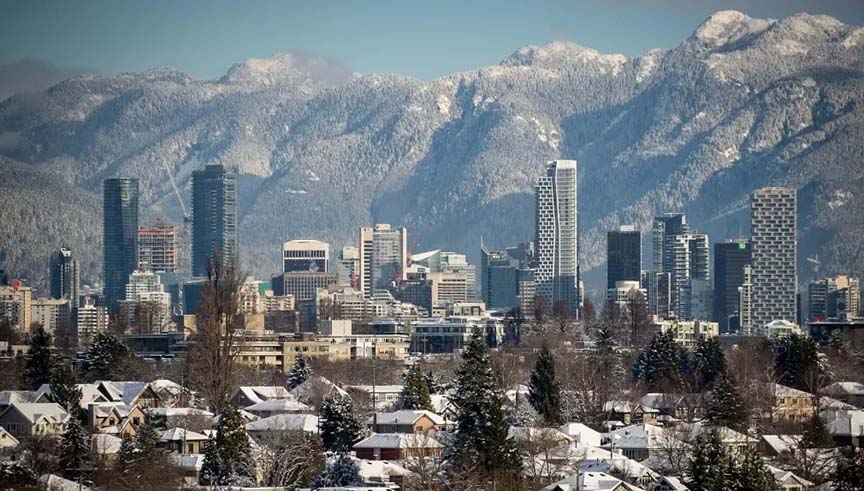
I first arrived in Vancouver on a morning filled with the scent of the sea breeze. Even before the plane had fully landed, I could see a distinctive scene through the window: the city’s skyline on one side, a mist-shrouded coastline on the other, and further off, the rolling North Shore Mountains. In that moment, I understood why the city is hailed as “one of the most livable coastal cities”—it wasn’t just a marketing slogan, but a tangible quality of life.
Stepping out of the airport, the air felt remarkably fresh—not bitingly cold, but mild and carrying the moist, salty breath of the ocean. On the way to the city center, the driver casually remarked, “If you like nature, you’ll love Vancouver.” It was a sentiment I would go on to confirm time and again.
Stanley Park: A Natural World at the City’s Edge
My first stop in Vancouver was Stanley Park. It feels almost like a “breathing space” the city has set aside for itself; located right next to downtown, it feels nothing like a typical part of the urban landscape.
I strolled along the seawall, with the calm bay on one side and towering pine forests on the other. Seagulls occasionally swept across the water, and in the distance, yachts and cargo ships moved slowly by. The breeze carried the clean, crisp scent of pine.
What struck me most was the sense of “boundlessness”—it was hard to tell where the park ended and the city began. Runners, cyclists, and dog walkers all blended naturally along the coastline, creating a seamless, harmonious atmosphere.
I paused to sit on the seawall for a while, watching the waves lap rhythmically against the rocks; the motion was deeply relaxing. In that moment, I finally understood why locals treat this place as an integral part of their daily lives rather than just a tourist attraction.
Granville Island: A Pocket of Slow Living in the City
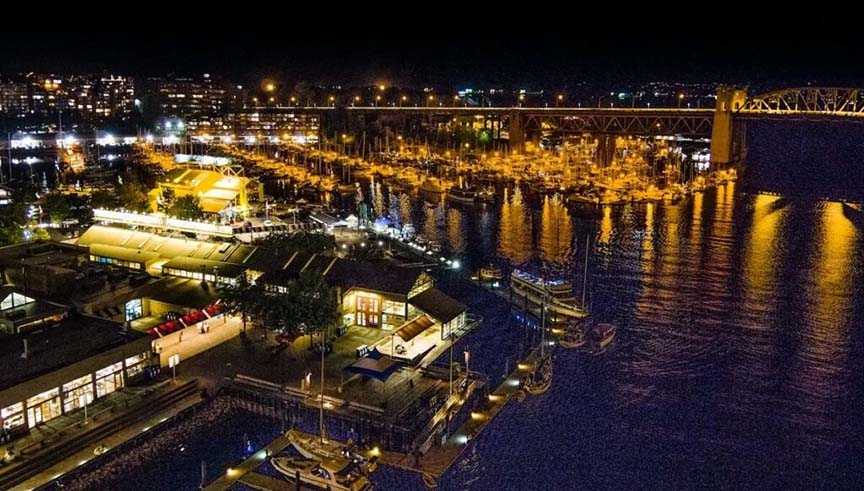
The next day, I visited Granville Island. The journey there by small water taxi from downtown was an experience in itself; the short trip felt like transitioning from a modern metropolis into a space defined by a more relaxed, everyday rhythm.
The island’s Public Market is the liveliest spot, bustling with stalls offering fresh fruit, seafood, baked goods, and handicrafts. I bought a fresh salmon sandwich and sat on a seaside bench to eat it; nearby, children were feeding pigeons, while in the distance, an artist was painting a watercolor.
There is no sense of urgency here to “check off” tourist attractions; everything is relaxed. You can stroll at your leisure or simply sit and gaze at the sea, doing nothing at all.
What I particularly love about this place is that it hasn’t been artificially “touristified”; instead, it retains the authentic feel of everyday life.
The North Shore Mountains: A Different World Behind the City
If the ocean defines Vancouver’s primary character, the North Shore Mountains represent its other side.
I visited the Capilano Suspension Bridge; standing on it, I looked down at a deep canyon and river, flanked by dense forest. When the wind blew, the bridge swayed gently—a sensation that was both nerve-wracking and exhilarating.
Venturing a little deeper into the mountains revealed a completely different world. The air was cooler, the light softer, and the trees so tall they seemed almost unreal. In that moment, it struck me that Vancouver isn’t just a single city, but an “island of life” embraced by nature.
Later, I took the gondola up Grouse Mountain. From the summit, looking down at the city, Vancouver resembled a painting segmented by sea, mountains, and light: modern architecture on one side, forests and snow-capped peaks on the other, and the slow, steady flow of urban life in between.
Seascape and City: A Unique Sense of Fusion
After spending a few days in Vancouver, I realized that what makes the city truly special isn’t any single attraction, but its overall sense of fusion.
You can experience three different things in a single day:
A morning walk by the sea, working in a downtown café at midday, and hiking in the mountains in the afternoon.
This kind of transition isn’t forced; it happens naturally. There are no distinct boundaries between the city and nature; they are seamlessly interwoven.
Walking through the historic streets of Gastown, I saw red-brick buildings and the Steam Clock; yet, looking up, I could see modern glass skyscrapers and the silhouettes of distant mountains. This contrast didn’t clash—it felt perfectly harmonious.
The Pace of Slow Travel
The strongest impression Vancouver left on me was its sense of “slowness.”
It wasn’t a slowness that bred boredom, but rather a pace that invited me to pause and observe—
to watch the rhythm of the waves, the demeanor of people in the cafés, and the shifting interplay of light and shadow between the mountains and the cityscape.
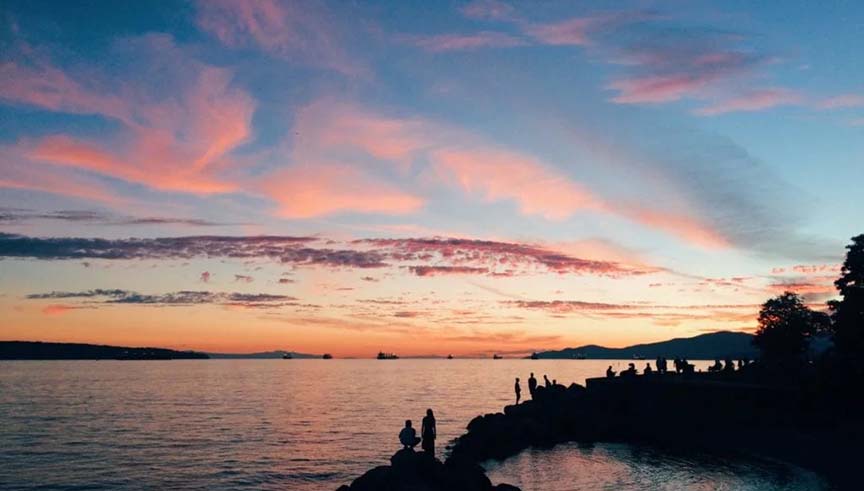
One evening, I sat at English Bay watching the sunset. As the sun slowly dipped below the horizon, the sky shifted from gold to shades of pink and violet, and the water seemed bathed in a soft, ethereal glow. Many people around me simply sat in quiet contemplation; no one was in a rush to leave.
I took very few photos in that moment, feeling that no image could truly capture the essence of the experience.
Where Nature and City Breathe Together
As I left Vancouver, I glanced back from the airport. In the distance, the hazy silhouettes of mountains and the city skyline formed layers that seemed gently superimposed upon one another.
The city didn’t make an impression through sheer spectacle; instead, it gradually etched itself into my memory through a lingering sense of comfort. It is not a place for rushing through a checklist of sights, but a place suited for living, for lingering, and even for simply daydreaming.
If I had to sum up my experience in Vancouver in a single sentence, it would be this:
It was the place where I truly understood, for the first time, what it means for a city and nature to coexist in harmony.