When I first visited Toronto, I didn’t rush to see the CN Tower or the waterfront; instead, I chose to experience the city through its hotels.
In hindsight, that was the perfect choice. In Toronto, a hotel is more than just a place to sleep—it serves as a cross-section of the city’s various layers: some sit at the efficient heart of the Financial District, others embrace the open feel of the lakeshore, some are tucked away in historic buildings, and others are nestled within residential neighborhoods.
Moving between these five hotels allowed me to gradually piece together the full picture of the city.
1.Fairmont Royal York | A Classic First Impression
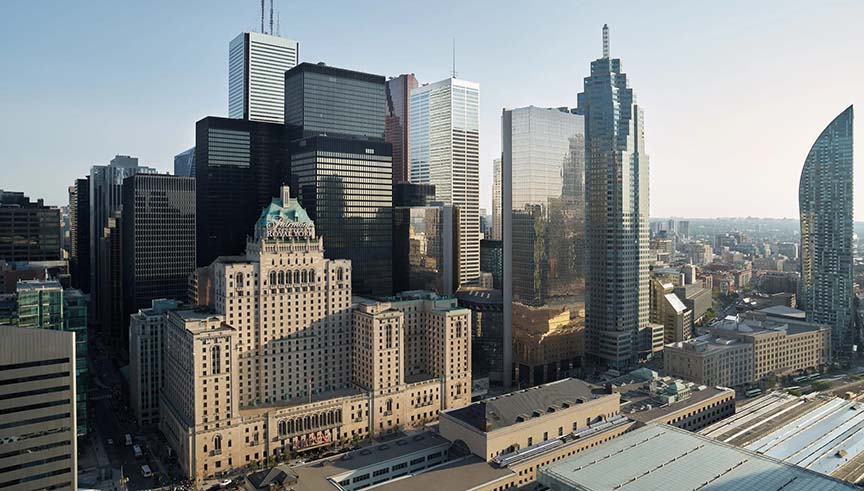
I spent my first night in Toronto at the Fairmont Royal York.
Located right next to Union Station, the hotel is the kind of building where you can sense its history the moment you step inside. With its soaring lobby, vintage chandeliers, and stately décor, it immediately makes one thing clear: this is a hotel with a storied past.
Check-in was busy, yet orderly. The staff were highly efficient, and everything ran smoothly.
Once in my room, the first thing that caught my eye was the urban layout outside the window. Railways, streets, and skyscrapers intertwined to create a quintessential North American cityscape.
I didn’t venture out much that night; instead, I sat by the window and watched the city lights gradually come to life. It struck me that this hotel served as a “gateway” to Toronto—it didn’t just showcase the scenery; it invited me into the city’s very system.
2.The Ritz-Carlton Toronto | Modern Luxury and Urban Heights
My second stop was The Ritz-Carlton Toronto, located in the heart of the downtown core.
In contrast to the historic feel of the Royal York, this hotel offered a completely different vibe: modern, understated, and defined by a sense of spaciousness.
The room featured massive floor-to-ceiling windows that framed the city skyline perfectly. I could clearly observe the changing character of the CN Tower throughout the day—its structural form standing out by day, and its illuminated presence becoming the focal point by night.
My favorite moments were spent sitting by the window at dusk, watching the city transition from day to night. As lights flickered on and traffic began to flow, the entire city seemed to shift into a different rhythm.
The service here was discreet—never intrusive, yet always attentive—striking the perfect balance. It gave me a glimpse of another side of Toronto’s “upscale urban lifestyle”—one defined not by ostentation, but by a sense of composure and balance.
3.Hotel X Toronto | Open Spaces by the Lake
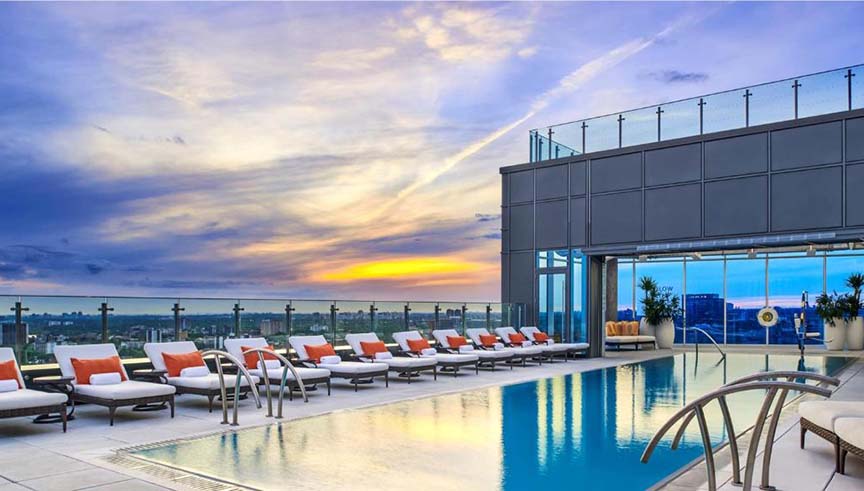
The third stop is Hotel X Toronto, situated near Lake Ontario.
Traveling here from the city center, the sense of space shifts instantly. The skyscrapers vanish, replaced by expansive waters and lower-density architecture.
The hotel itself is thoroughly modern with a resort-like feel. The rooms offer sweeping views of the lake and the distant city skyline.
I was particularly struck by the early mornings. Sunlight would bounce off the lake and stream into the room, bathing the space in a soft glow. It felt less like being in the city and more like breathing freely at its edge.
I also visited the rooftop area to take in the view where the lake and the cityscape meet. In that moment, I realized that Toronto isn’t merely an “inland city”; it possesses a significant waterfront character.
4.The St. Regis Toronto | A Refined Yet Understated Urban Experience
The fourth hotel is The St. Regis Toronto.
Its style strikes a balance between the modern and the classic; there are no flamboyant design statements, yet the attention to detail is exquisite.
The interior lighting is soft, and the spatial layout is thoughtfully designed. The city view remains the focal point, but unlike the Ritz—which emphasizes height—the experience here is geared toward comfortable, relaxed viewing.
My two-night stay followed a steady, pleasant rhythm: coffee in the morning, exploring the city during the day, and returning to the hotel to unwind at night.
One evening, I stood by the window gazing at the city lights. The traffic, the illumination, and the architecture wove together, yet the atmosphere wasn’t chaotic; instead, there was a distinct sense of order.
This hotel helped me understand that Toronto’s “sophistication” isn’t about visual impact, but rather a consistently refined experience built up over time.
5.The Broadview Hotel | Authentic Living in a Historic Building
The final stop is The Broadview Hotel, located in a neighborhood with a genuine, lived-in feel.
This hotel is completely different from the others; it is neither a skyscraper in the financial district nor a lakeside resort, but a historic building that has been thoughtfully renovated.
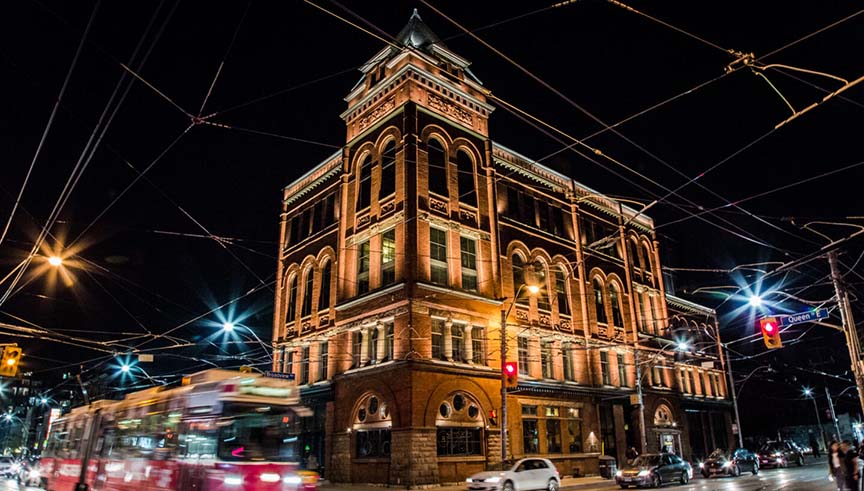
The rooms are compact but full of character. Wood structures, vintage elements, and subtle industrial touches give the space a truly authentic feel. Downstairs, there are bars and restaurants where locals gather in the evenings; it isn’t noisy, but rather possesses a natural, communal atmosphere.
I really love the mornings here: the streets slowly come to life, coffee shops open their doors, and the city settles into its daily rhythm.
This hotel allowed me to see the most authentic, lived-in side of Toronto—not from a tourist’s perspective, but from that of a resident.
The true fabric of Toronto revealed through its hotels
As I moved between these five hotels, I gradually realized that the urban experience in Toronto is layered.
They are not merely places to stay, but expressions of the city’s different facets.
When I left Toronto, what stayed with me wasn’t a specific hotel room, but the way the city transforms across different spaces.
To sum it up in a single sentence:
Toronto’s hotels are more than just places to stay; they are cross-sections of the city’s diverse lifestyles.